Tasmania’s Climate Is Changing. What It Means For The Places We Visit
Tasmania is known for clean air (think Ocean Beach), cool forests (like Mt Field National Park) and some of the world’s most spectacular wild places (like the Bay of Fires and Tasman Peninsula). It’s also one of the places in Australia where climate change is being closely studied, and we think our guests should understand it as they journey around the island on our guided tours.
How climate change is affecting Tasmania
Tasmania sits at a latitude of around 42 degrees south. It has a milder climate than most of Australia, and some people think of Tasmania as a climate refuge. But the climate is changing noticeably, and it affects the landscapes our tours visit.
Oceans and the east coast. Waters off eastern Tasmania are warming faster than much of the world’s ocean. Marine heatwaves have become more common, and around 90% of the state’s giant kelp had disappeared by 2011. Warmer water has also brought new species south, including sea urchins that graze on kelp and affect the habitat of abalone and rock lobster (we call them crayfish). Freycinet’s coastline is part of this picture.
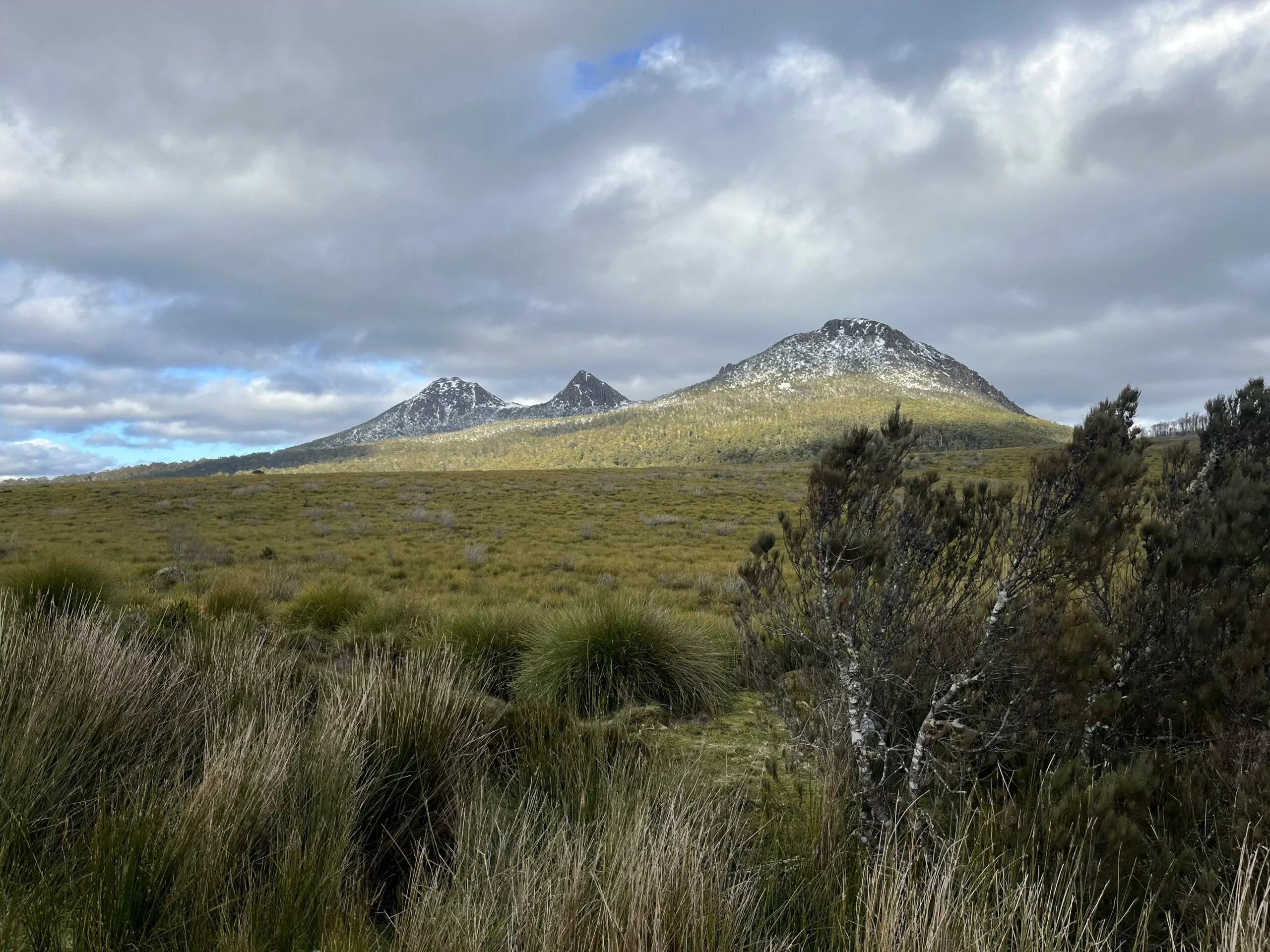
Alpine areas. In places like Cradle Mountain, projections point to less snow and warmer, drier summers. This matters for slow-growing alpine plants, many of which are found nowhere else. Pencil Pine, King Billy Pine, Cushion Plants and Fagus are just some examples. Dry lightning fires in 2016 burned parts of the World Heritage Area, and some of that vegetation may never fully recover.
Rainforests. Tasmania’s western rainforests, including areas like the Tarkine, grew up in cool, constantly wet conditions where fire was rare. Many of their species can’t survive it. Projections show the west coast getting wetter in winter but drier in summer, and scientists expect more dry lightning storms. Dry spells are what allow rainforest to burn, so researchers are watching this closely.
Wildlife. Tasmania’s animals are responding to a changing climate too. The shy albatross breeds on just three Tasmanian islands and nowhere else in the world. Hot days and extreme weather are affecting breeding success, and conservation teams are trialling artificial nests to help chicks survive. The endangered swift parrot, which migrates to Tasmania to breed, depends on flowering blue gums. Modelling suggests almost a quarter of its nesting habitat could become climatically unsuitable by the end of the century.
Researchers at the University of Tasmania, CSIRO and the Tasmanian Government are tracking these changes, and conservation work is underway across the state.
What we’re doing
We calculate our carbon footprint annually to understand where our main emissions come from, and diesel is the largest source. Until suitable electric touring vehicles with supporting infrastructure are made available throughout Tasmania, we’re focussing on reducing diesel emissions by:
- Upgrading our vehicles. Replacing older buses with newer, more efficient ones
- Tracking fuel use across the fleet
- Considered route planning to avoid unnecessary kms
- Working with our guides on conservative driving techniques that reduce fuel consumption
Why small group touring makes sense
A group of up to 21 travelling in one Toyota Coaster uses far less fuel per person than the same number of visitors in separate hire cars covering the same route. For visitors wanting to reduce the impact of their holiday, joining a small group tour is one of the simplest choices they can make.
It also means a local guide who can point out what’s changing, and what’s thriving, along the way.
What you can do
- Bring a refillable bottle (Tasmanian tap water is excellent)
- Stay on marked tracks in fragile areas
- Follow our guides instructions at every stop
Understanding Tasmania’s landscapes makes visiting them more rewarding. We look forward to showing you the Tasmania we care about.
Visit Under Down Under’s website for bookings and to check availability on our multiday tours of Tasmania.
